
Theory semesters
Semesters 4 to 8 are the theory semesters at FMS. Here, you’ll learn all about electricity, refrigeration, process analysis, management and much more.
Theory and practice go hand in hand
At FMS, the theoretical part of the Operation Engineer programme begins in the 4th semester.
Here, you will be introduced to a wide range of technical and managerial subject areas, equipping you with the skills to work with the operation, maintenance, optimisation and management of technical installations and systems.
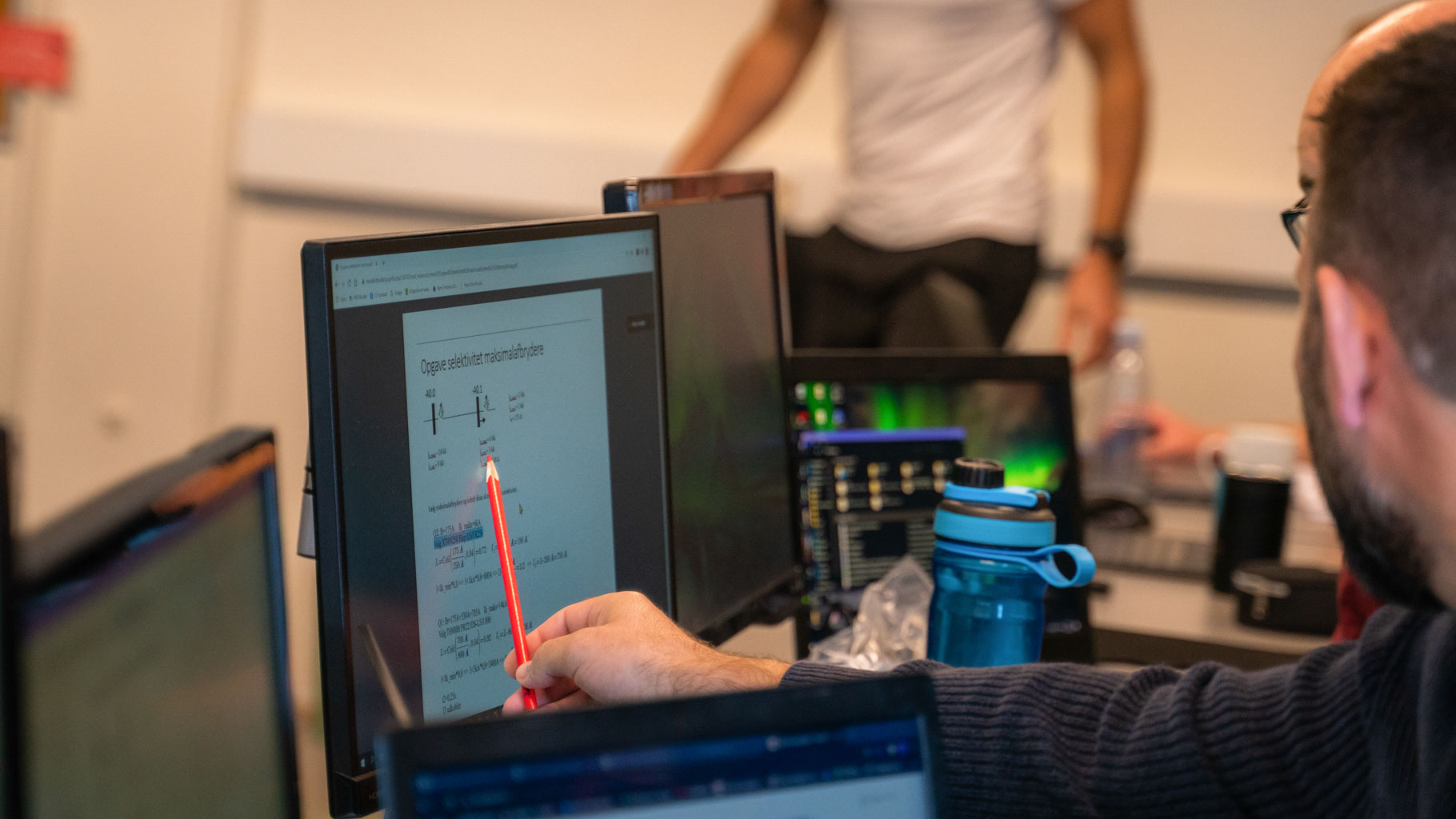
Throughout semesters 4 to 7, you will build a solid technical understanding of subjects including thermal machinery and plant, electrical machinery and installations, process analysis and automation, as well as management, economics and safety. Teaching alternates between theory, group work and practical exercises in the school’s laboratories, so that you learn to translate theoretical knowledge into concrete technical solutions.
You will also work on interdisciplinary projects, where the focus is on collaboration, problem-solving and analytical thinking.
In the 6th semester, you will, amongst other things, have the opportunity to collaborate with a company on a project within process analysis and automation.
In the 8th semester, you will have the opportunity to specialise through one of FMS’s two elective streams: Maritime or Applied Project Management in Technology.
The theory semesters thus provide you with both a broad technical foundation and the opportunity to delve deeper into the areas that interest you, before you complete the programme with a work placement and a bachelor’s project.
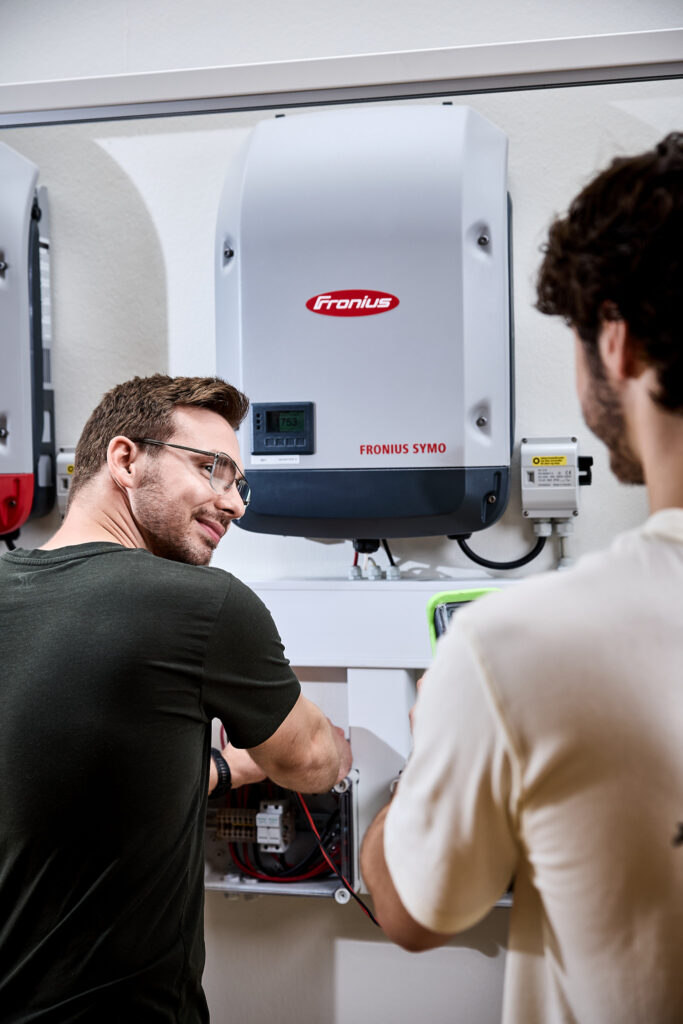
The programme alternates between theory, company visits and laboratory exercises, all of which provide a thorough understanding of the subject
Jonas Soltanizadeh Krohn
Studerende
What do I learn?
- Electrical and electronic machinery
- Thermal machinery and plant
- Process analysis and automation
- Management, finance and safety
- Interdisciplinary topics
- Elective: maritime
- Elective: Applied Project Management in Technology
From theory to practice
Practical exercises
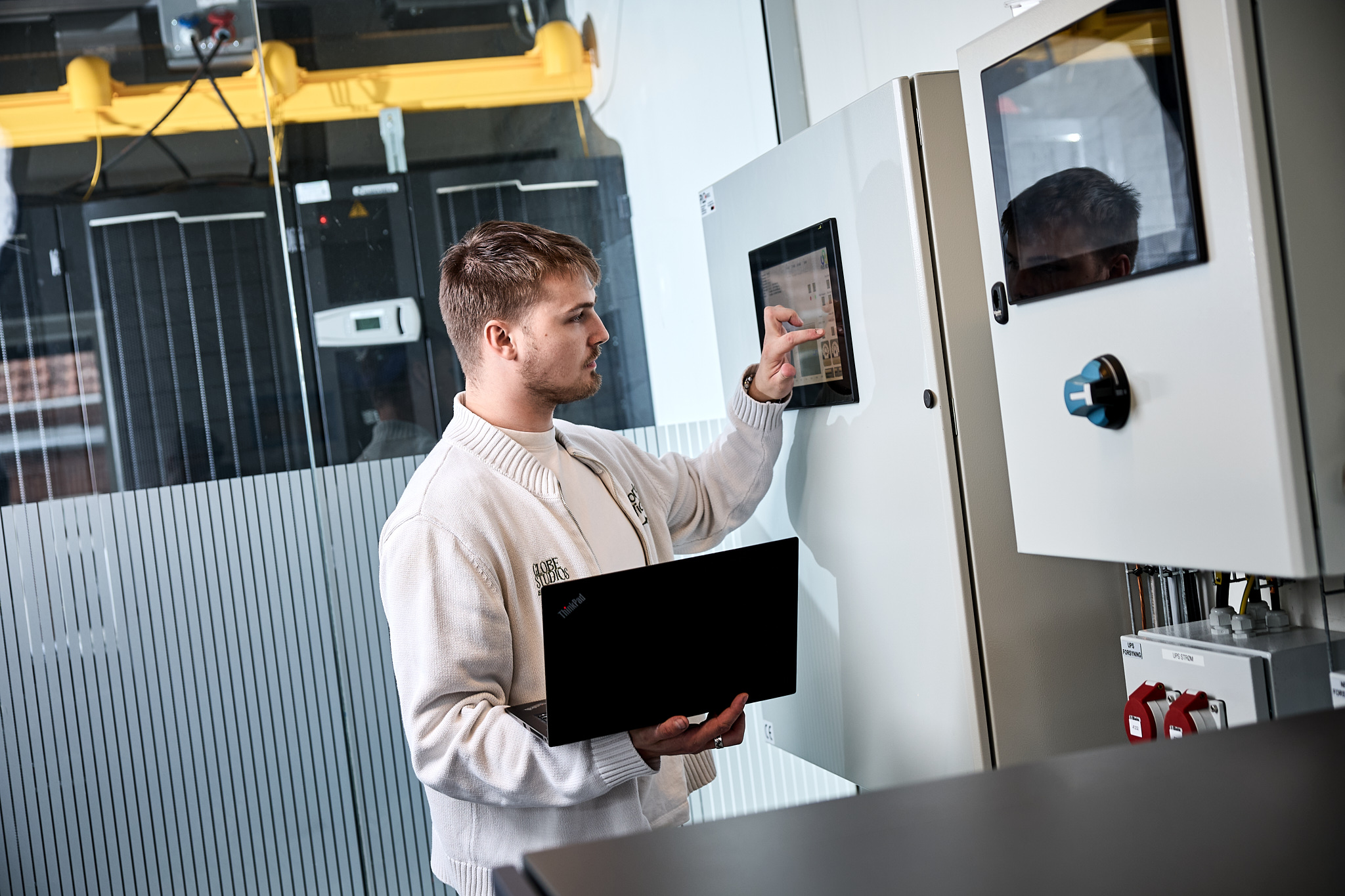
Although most of your time during the theory semesters will be spent in classrooms and group rooms, you will also undertake practical exercises in our laboratories and workshops.
It is important that you are able to apply the theory you learn in practical contexts, so you’ll have plenty of opportunities to practise. FMS has all the necessary machinery and technology you’ll need to become a skilled operation engineer.
Electives
Electives on 8th semester
In the 8th semester, you will have the opportunity to specialise through one of FMS’s two electives: Maritime or Applied Project Management in Technology. Here, you can tailor your programme towards either the maritime sector and work in marine engineering, or towards project management, energy optimisation, sustainability and safe operations.
Maritime
This course is compulsory if you wish to become a person in charge of the engine room on a ship. As part of this optional module, you will, amongst other things, take a smoke-diving and maritime safety course, and learn about ship engines.
Applied Projekt Management in Technology
On this course, you will acquire sought-after skills in applied project management. Among other things, you will learn about optimisation, cross-sector collaboration, sustainability and safe operations, and you will also be taught about organisation and finance.
About the theory semesters
From practical experience to theory
When you start the 4th semester at FMS, the theoretical part of the programme begins. Here, you will build on the practical experience you gained during the workshop module and work placement.
The Technology Management and Marine Engineering programme is a broad-based education
The Marine Engineer programme covers a wide range of subject areas. Among other things, you will work with electrical and thermal systems, process analysis, automation, management, finance and safety. This means that you will not be training in a single, narrow technical field, but will gain a broad professional knowledge that enables you to understand and work with complex technical systems across a range of industries.
Put the theory into practice
Although the theory semesters focus on academic and technical teaching, practical work remains an important part of the programme. At FMS, teaching alternates between blackboard lessons, group work and practical exercises in the school’s laboratories. Here, you will have the opportunity to put theory into practice and work with, amongst other things, electrical installations, ventilation, water level control and boilers. This provides a better understanding of how the theory is applied in real-world technical installations.
Collaboration and project work
You will be working alongside your fellow students throughout the programme. Group work and interdisciplinary projects are a natural part of the teaching, where you will learn to collaborate on technical problems and find solutions together.
In the 6th semester, one of the tasks you’ll undertake is to carry out a project in the field of process analysis and automation in collaboration with a relevant company. This will give you an insight into how the skills of a mechanical engineer are applied in the business world.
Classroom teaching with attentive professors
At FMS, teaching takes place in classes that provide scope for dialogue, questions and academic discussion. You’ll meet lecturers with extensive subject knowledge who’ll help you understand technical issues and put theory into practice. Teaching alternates between lectures, group work and laboratory exercises, giving you different approaches to the subject matter and the opportunity to learn in a variety of ways.
Responsibility for one’s own learning
As a student on the theory semesters, you must be prepared to take responsibility for your own education. This means that you must come to class prepared, participate actively in lessons and keep on top of assignments, projects and exams. Attendance is not compulsory on the programme, but FMS expects you to be actively engaged in your studies and to take responsibility for your academic development. It is therefore a good idea to develop some good study habits right from the start.
Structure of the programme
Four stages – one programme
4½ years · 270 ECTS — structured so that theory and practice go hand in hand throughout the programme.
Workshop programme
Basic training in technical drawing, welding, turning, etc. You will undertake a project and complete an apprenticeship.
Read more 02Theory semesters
Electrical systems, management, processes, maintenance. You’ll work in laboratories, simulators and engine rooms.
Read more 03Bachelor internship
A semester working in industry or at sea — with real responsibility. Put the knowledge you’ve gained throughout your course into practice.
Read more 04Bachelor's project
A final project, often carried out in collaboration with a company and based on a real-world challenge it faces. The course concludes with an oral examination based on your project.
Read more